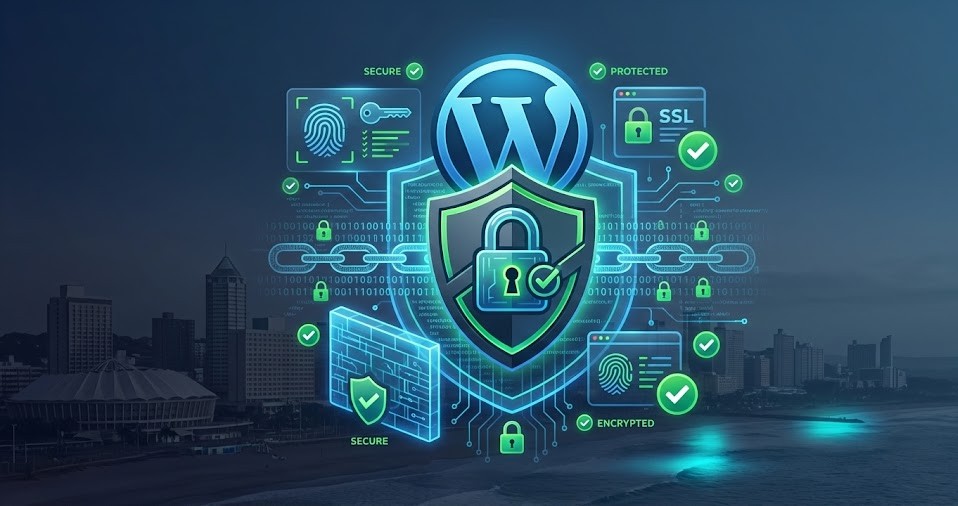
In the rapidly evolving landscape of digital marketing, 2026 marks a pivotal shift in how search engines evaluate business websites. For years, business owners operated under the assumption that Search Engine Optimization (SEO) and website security were two distinct silos. The IT department handled the firewall; the marketing team handled the keywords.
In 2026, that separation is officially dead.
With the rollout of the Google Andromeda Update, search algorithms have transitioned from merely checking technical metadata to holistically evaluating Brand Authority. At the heart of this evaluation lies the concept of Trust. If your website is vulnerable, slow, or compromised, your SEO strategy fails-regardless of how good your content is.
For WordPress users, this convergence of security and visibility is the defining challenge of the year. Here is why integrating security protocols into your SEO strategy is no longer optional, but essential for maintaining your market position.
The Shift: From Technical Checklists to Brand Authority
To understand why security is now a primary SEO metric, we must look at the evolution of Google's E-E-A-T framework (Experience, Expertise, Authoritativeness, and Trust). While all components are vital, Google has explicitly prioritized Trust as the "center of the solar system."
The 2026 trend focuses on "Brand Authority." Search engines now simulate human experience more closely than ever. A human user does not trust a business that triggers browser warnings or redirects to spam. Consequently, Google-acting as the ultimate guardian of user experience-withdraws its trust (and your rankings) immediately.
At SEO Durban: We build rankings on a foundation of security. You cannot build a skyscraper on a cracked foundation; similarly, you cannot build high-ranking SEO on a vulnerable WordPress installation.
The WordPress "Trust" Deficit: Real SEO Consequences
WordPress powers over 40% of the web, making it the primary target for malicious attacks. When a site is compromised, the SEO damage is often catastrophic and "silent" until it's too late:
SEO Spam & Index Bloat
Hackers inject "Japanese Keyword Hacks" or "Pharma Hacks," creating thousands of junk pages on your domain. This clogs your crawl budget, causing Google to stop indexing your actual service pages.
User Safety Warnings
If Google detects malware, it replaces your search snippet with a "This site may be hacked" warning. This reduces your Click-Through Rate (CTR) to near zero.
Core Web Vital Failures
Many hacks use your server resources to mine crypto or send spam emails. This slows your site to a crawl, triggering an immediate penalty in the INP (Interaction to Next Paint) and LCP metrics.
Why This Matters for the Durban Market
For local businesses, trust is even more fragile. If a potential customer in Durban searches for your services and encounters a security warning, they don't just click "back"-they go to your competitor.
In a saturated local market, technical robustness is the tie-breaker. By proving to search engines that your brand is a "Digital Fortress," you gain a significant edge in local search results.
Is Your WordPress Site a Security Risk to Your Rankings?
Many business owners don't discover their site has been compromised until their rankings collapse. Our Technical SEO Audit includes comprehensive security scanning to identify vulnerabilities before they damage your visibility.
Get Your Free Security & SEO Audit ->Actionable Takeaways: Secure Your SEO Strategy
To align with 2026 Brand Authority standards, you must integrate these security-SEO pillars:
Implement a Web Application Firewall (WAF)
A WAF (like Sucuri or MalCare) blocks malicious bots before they reach your site, protecting your analytics data and crawl budget.
Resolve "Mixed Content" Errors
Having an SSL (HTTPS) is the bare minimum. Ensure every image and script is delivered securely to maintain the "Padlock" of trust.
Rigorous Update Protocols
Outdated plugins are the #1 entry point for hacks. Use a staging environment to test updates for Core Web Vitals impact before going live.
Monitor Search Console
Regularly check for unexpected spikes in indexed pages. If your 10-page site suddenly shows 2,000 pages in the index, you've been breached.

Recommended 2026 Security Stack
To help you get started, here are two plugin recommendations that directly protect your SEO:
Conclusion: Security is the New SEO
The era of treating website security as an IT "extra" is over. In 2026, a secure website creates trust; trust drives engagement; and engagement drives rankings.
Your website is likely your most valuable digital asset. Protecting it is a strategic marketing imperative. If you are concerned that your current WordPress setup is undermining your growth, do not leave it to chance.
Secure Your Reputation and Your Rankings
Speak to the experts at SEO Durban today. We'll help you secure your website with a Technical SEO Audit that covers both visibility and vulnerability.
Frequently Asked Questions (FAQ)
Google's 2026 algorithms prioritize Trust as the center of E-E-A-T evaluation. Compromised websites trigger security warnings, slow performance, and index bloat-all of which directly harm rankings. Security is now a core Brand Authority signal.
Hacked WordPress sites suffer SEO spam injection (creating thousands of junk pages), user safety warnings in search results that reduce CTR to near zero, and Core Web Vital failures as server resources are hijacked for malicious purposes.
Key measures include implementing a Web Application Firewall (WAF), resolving mixed content errors, maintaining rigorous update protocols for plugins and themes, and monitoring Search Console for unexpected index spikes indicating compromise.
For free protection, All-In-One WP Security (AIOS) blocks SEO spam and brute-force attacks. For premium protection, MalCare Pro runs scans on external servers (protecting your Core Web Vitals) and provides instant malware removal.
Warning signs include unexpected spikes in indexed pages in Search Console, strange redirects, new admin users you didn't create, sudden ranking drops, and Google Search Console security warnings. Regular monitoring is essential for early detection.
WordPress Security Services Across Durban
Secure websites rank better. We provide WordPress security audits in Umhlanga and security hardening for Westville businesses. Our protection extends to sites in La Lucia, Pinetown, and Hillcrest.