
What Google Just Announced (And Why You Should Care)
Google I/O 2026 happened on 20 May. The announcements from the Search team represent the biggest shift in how AI search optimisation works—in South Africa and globally—since the Knowledge Graph launched in 2012. Five changes matter for every business owner reading this.
- AI Mode hit 1 billion monthly users. That happened within 12 months of launch. Queries more than doubled every quarter. Google’s AI is now the default way a billion people find answers online.
- The search box accepts images, video, and files. Users can now point Google at a competitor’s website and ask “find me someone better in Durban.” Your content needs to be the answer.
- Search agents run 24/7 in the background. Google launched AI agents that continuously monitor the web on behalf of users. When the agent finds what the user needs, it sends a summary. Not a link. A summary.
- Generative UI builds tools inside search results. Google now creates interactive dashboards, calculators, and comparison tools directly in the results page. Fewer users click through to websites.
- Personal Intelligence expanded to 200 countries. That includes South Africa. Google AI now cross-references your website, reviews, and Google Business Profile against each user’s personal context.

The Problem: Your Website Is Becoming Invisible
AI search optimisation in South Africa is no longer optional. When someone searches “best accountant in Durban” or “bond insurance quotes KZN,” Google AI Mode doesn’t show 10 blue links anymore. It reads hundreds of pages, pulls the best information from each, and delivers one synthesised answer.
If your competitor’s data is in that answer and yours isn’t, you get zero clicks. Zero traffic. Zero leads.
Zero-click searches have been growing for years. AI Mode accelerates that trend dramatically. Google confirmed that AI Mode queries more than doubled every quarter in 2026. That’s traffic being redirected away from websites that aren’t structured for AI consumption.
Search Agents Are the Real Threat
The search agent announcement carries the most long-term consequences for South African businesses. Google’s new “information agents” run 24/7 in the background. They monitor the web, news, social media, and real-time data on behalf of each user.
When an agent finds something matching the user’s criteria, it sends a push notification with a synthesised summary. Not a link to your website. A summary that may or may not mention you.
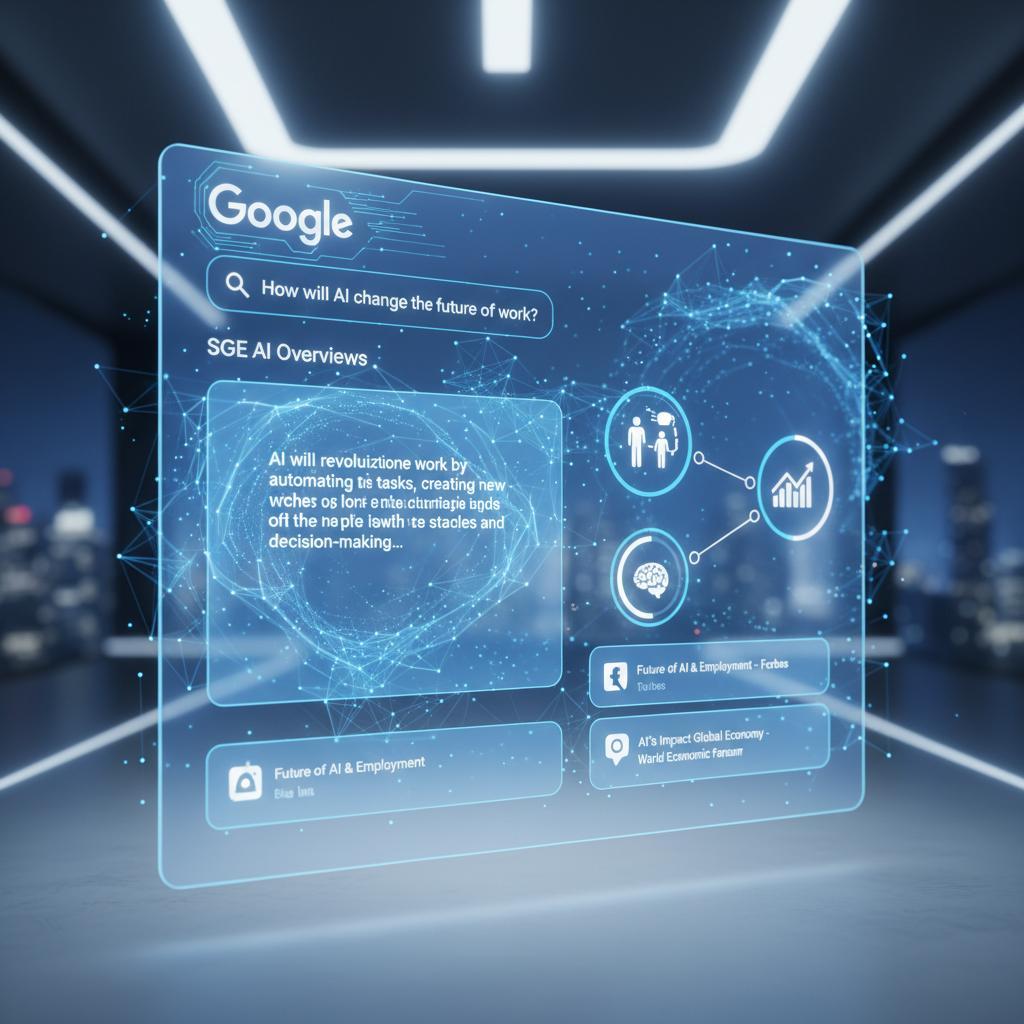
Picture this: a Durban homeowner configures an agent to find the cheapest bond insurance. That agent scans every insurance provider’s website, every review site, every comparison tool. If your business data isn’t structured in a way that machines can read, the agent skips you entirely. Your competitor with proper structured data gets the recommendation.
Search agents launch this summer for Google AI Pro and Ultra subscribers. Within a year, they’ll be mainstream.
What Makes a Business “AI-Visible”?
AI visibility comes down to four factors. We’re not going to walk you through implementation—that’s a specialist job requiring months of technical work. But you should understand what separates businesses that get cited by AI from those that don’t.
-
Structured data that machines can read. Schema markup tells AI exactly what your business does, where you operate, what you sell, and how to contact you. Without it, AI models guess—and usually guess wrong.
-
Entity authority. Google needs to know that your business is a real, credible entity. That means consistent information across your website, Google Business Profile, directories, and social profiles. Gaps erode trust.
-
Content that AI models cite. Ranking on page 1 isn’t enough anymore. Your content needs to be structured so that AI models pull quotes and facts from it. Most business websites fail this test completely.
-
Technical access for AI crawlers. If AI crawlers can’t access your site properly, you don’t exist in their training data. Robots.txt misconfigurations, slow page speeds, and JavaScript-heavy pages block AI visibility.

Each of these factors requires specialist expertise. This isn’t something you can fix with a WordPress plugin or a weekend of DIY work. AI search optimisation demands the same level of technical precision that traditional SEO needed in its early days—except the competition window is closing fast.
How SEO Durban Gets You Into AI Search Results
We’ve been preparing for this shift since 2024. Our Generative Engine Optimization (GEO) service is built specifically to solve the AI visibility problem for South African businesses.
-
AI Visibility Audit. We map exactly where your business appears (and doesn’t appear) across ChatGPT, Google AI Mode, Perplexity, and Claude. You get a clear picture of your current AI search presence.
-
Schema and entity authority buildout. We implement the structured data and entity signals that AI models need to recognise, trust, and cite your business.
-
Content restructuring for AI citability. We restructure your existing content so that AI models can extract clear, quotable answers from your pages.
-
Ongoing AI citation monitoring. We track your brand’s appearance in AI-generated responses weekly and adjust strategy based on real data.
We also offer a dedicated AI SEO service for businesses that want to maintain their traditional Google rankings while building AI visibility in parallel.
Get Your Free AI Visibility Audit
Find out where your business stands in AI search. We’ll check your visibility across ChatGPT, Google AI Mode, Perplexity, and Gemini—and show you exactly what needs fixing.
Book Your Free Audit →No cost. No obligation. Results delivered within 48 hours.
What Happens If You Do Nothing
AI search isn’t a trend that might reverse. Google committed to it publicly at I/O 2026 in front of millions of developers. A billion people already use it monthly. The direction is set.
Businesses that optimise for AI search now will capture the traffic that competitors lose to zero-click results. The first movers in each industry and location lock in their AI visibility advantage. Late adopters fight for whatever scraps remain.
That gap between traditional ranking and AI visibility is where businesses lose revenue without realising it. Leads that used to come through Google clicks now get answered by AI—and your competitors get the recommendation instead.

The window to act is now. Not next quarter. Not next year. Every week you wait, AI search grows, your competitors adapt, and the cost of catching up increases.
Ready to find out where you stand? Our free AI Visibility Audit takes 48 hours and shows you exactly what AI search engines see when they look at your business.
Our Take: The Downsides of Google AI Search
We help businesses succeed in AI search. That’s our job. But we’d be doing our clients a disservice if we didn’t flag what concerns us about where this is heading.
None of this means AI search is going away. It isn’t. But our clients deserve to understand both sides before investing in a channel that Google controls entirely.